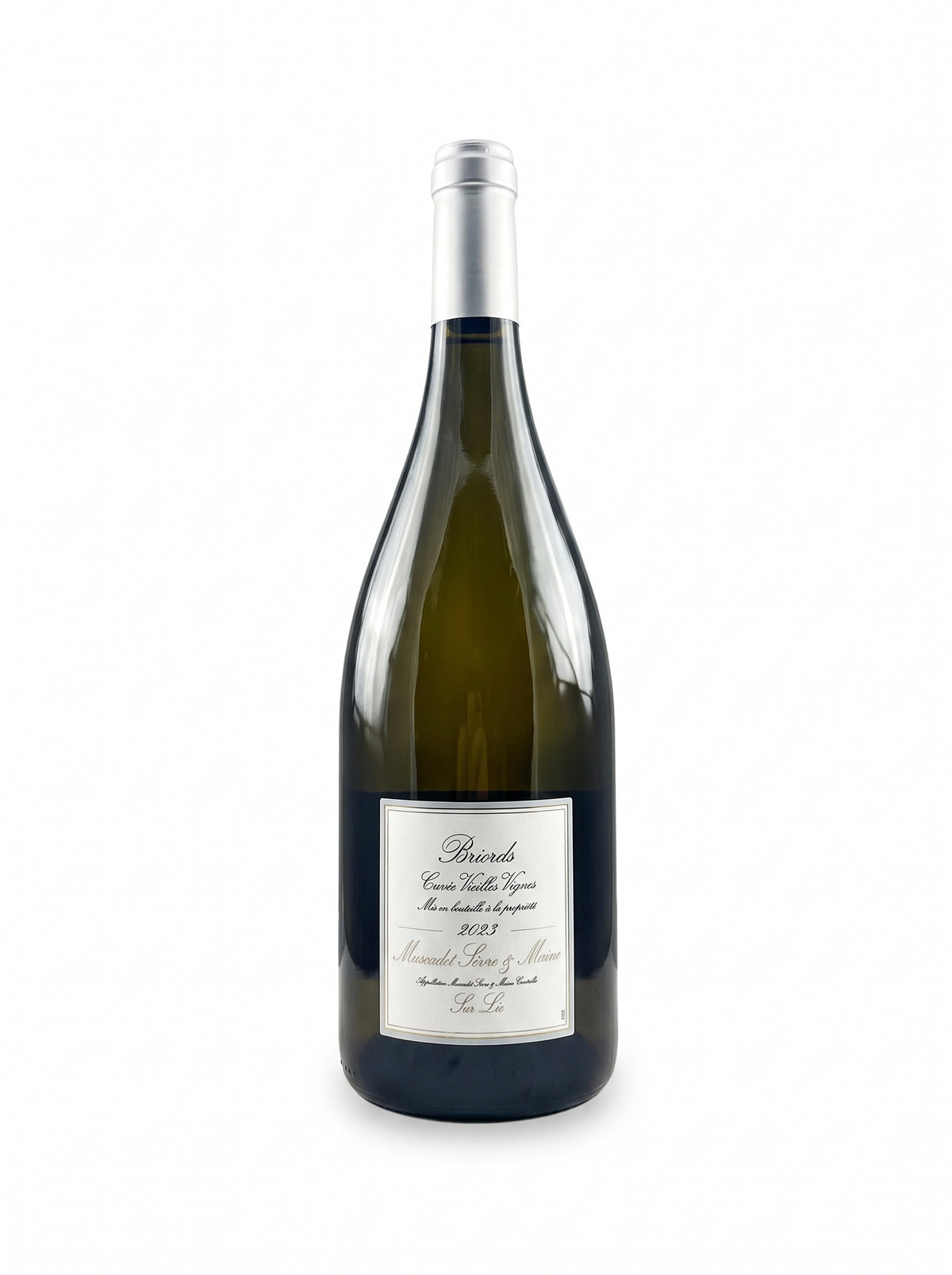
2025 Pepiere Muscadet Clos de Briords
A white wine made from 100% Melon de Bourgogne from a single-plot vineyard of old vines, the vast majority between 50 and 70 years old, planted between 1950 and 1989. The Clos des Briords is located on the hillsides of the Maine River, a tributary of the Loire, and totals 4.40 hectares. The bedrock is Granite de Château Thébaud, a fissured rock allowing deep root penetration, with thin topsoils of clay, sand, and gravel providing excellent drainage. This old-vine cuvée allows longer hang-time for optimal maturity, creating a more powerful, mineral-driven Muscadet that is quite austere in its youth, developing complexity in aromatics and structure over months or years. The wine is ageworthy. Served decanted at 12-14°C.
Regular price
$36.00
Regular price
Sale price
$36.00
Specs
Geography
Farming
Harvest
Hand-harvested grapes from massale selection vines (primarily over 60 years old) with deep root penetration through fissured granite bedrock; grapes transported carefully and pressed within two hours of picking as whole clusters in gravity-fed pneumatic press without prior crushing.
Fermentation
Must racked after 12 hours to remove solid matter; spontaneous fermentation with indigenous yeasts from grape skins at controlled temperatures; no chaptalization; no malolactic fermentation.
Aging
Aged on lees for 8-9 months in large underground tanks, with extended lees aging (minimum 2 years, sometimes 36-48 months) in stainless steel vats without racking; minimal sulfur use (average 5g total added in December and January); no modern enological additives; bottled unfined and unfiltered.