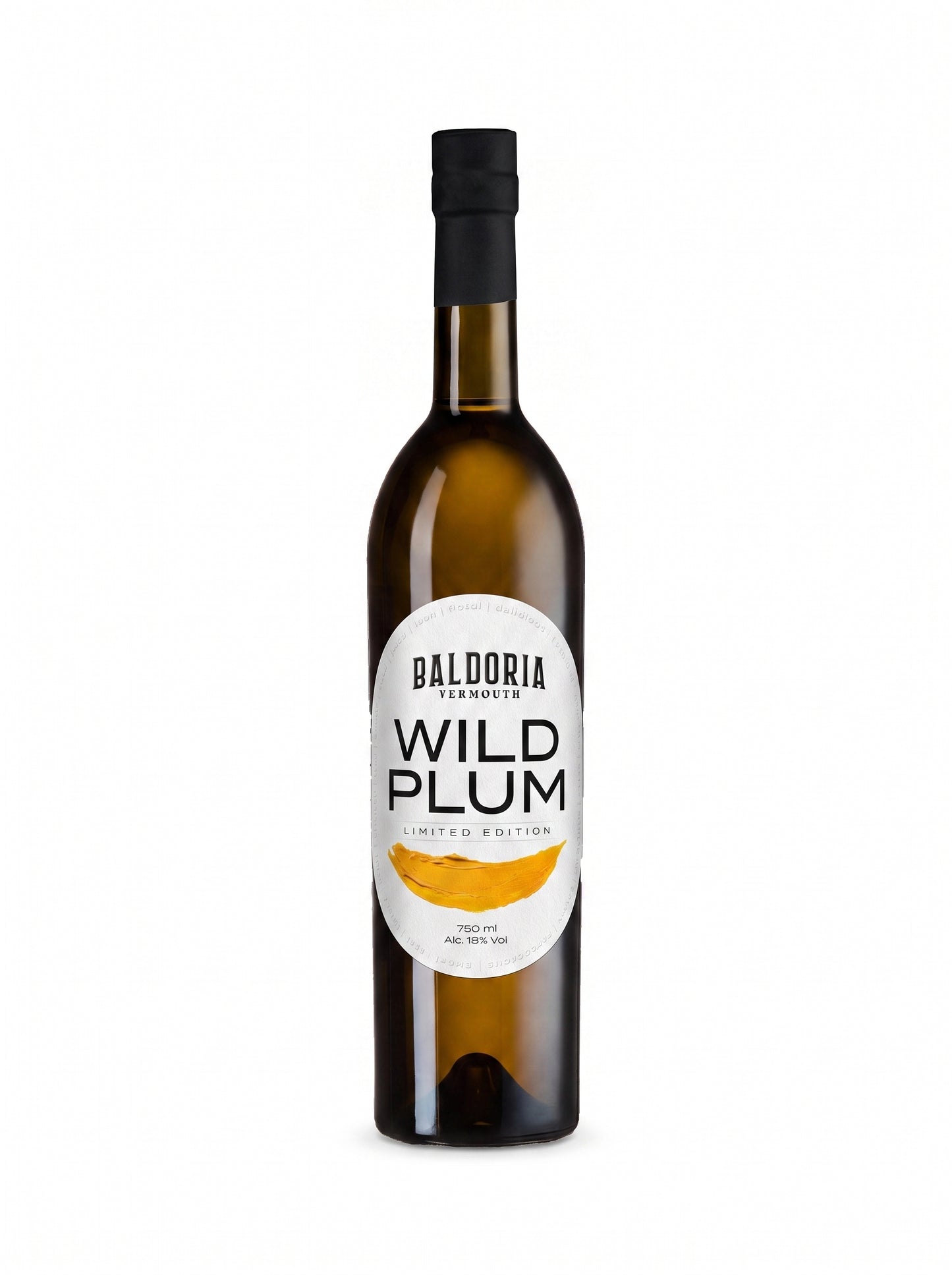
NV Baldoria Wild Plum Vermouth
Baldoria Wild Plum Vermouth is a semi-dry white vermouth crafted in Boves, Piedmont, on a base of Piedmontese Chardonnay wine at 18% ABV. This special edition represents a collaboration with the Alpine Maritime Society to revive a nearly extinct wild plum species native to the Maritime Alps. The production involves separate macerations of botanicals—including two species of wormwood (artemisia vallesiaca and artemisia pontica), clary sage, rosemary, fennel, and orange peel—in a hydro-alcoholic solution, later blended with the wine base and natural sugars. The vermouth features a unique balance of tart wild plum flesh and warm almond notes from the kernel, with no artificial flavors, extracts, colorants, or preservatives used.
Regular price
$60.00
Regular price
Sale price
$60.00
Specs
Farming
Harvest
Botanicals foraged from the foothills of the Alps
Fermentation
Separate macerations of individual botanicals in a hydro-alcoholic solution (grain-neutral spirit and water) and in a base of Piedmontese Chardonnay wine; natural almond-like notes extracted directly from the plum's kernel; macerations then blended with natural sugars diluted in wine solution; no synthetic additives, artificial flavors, extracts, colorants, clarifying agents, or preservatives used
Aging
Aged in steel tanks followed by light filtration and bottling; artisanal process allows for possible natural sedimentation