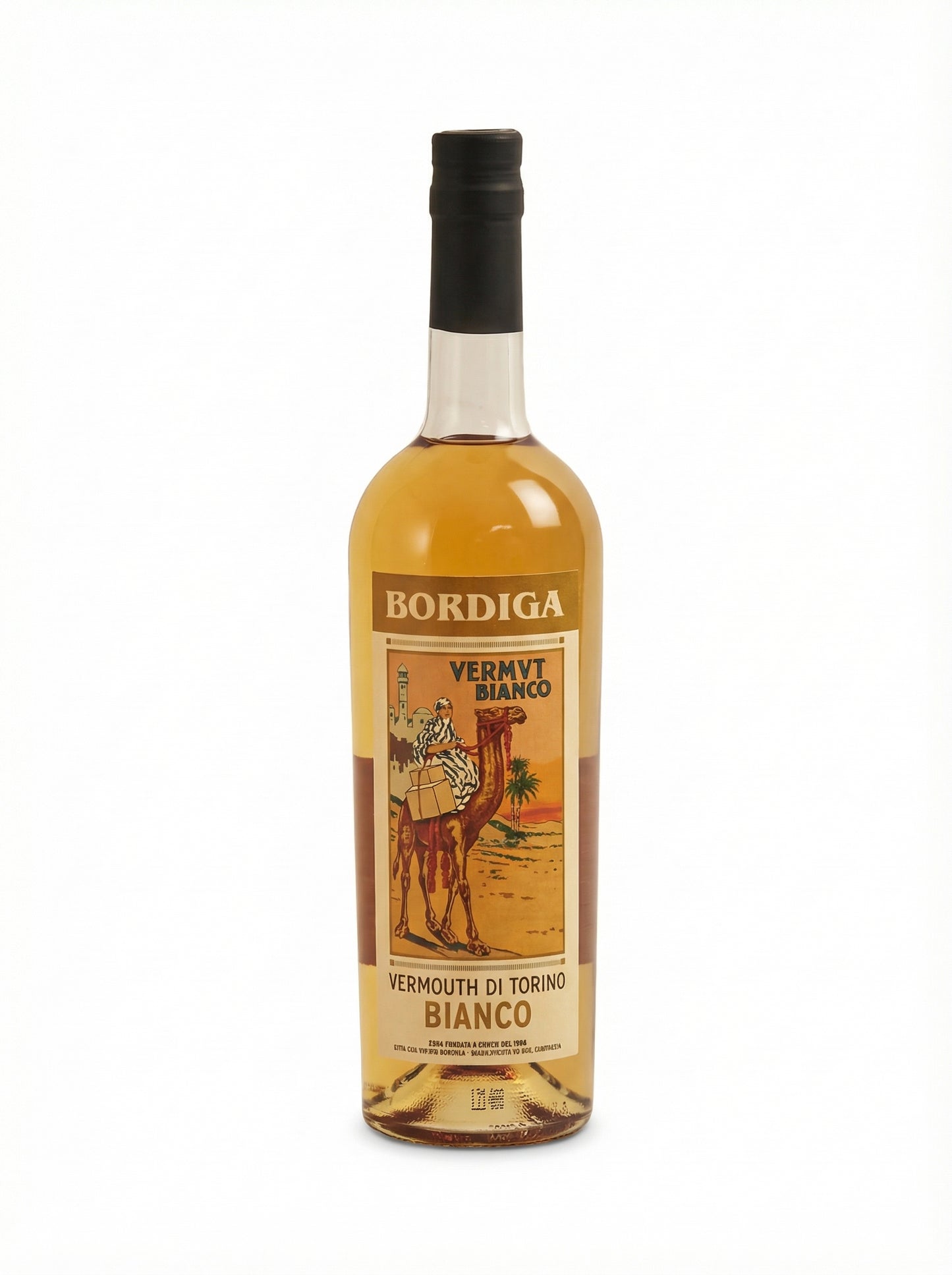
NV Bordiga Vermouth Bianco
The original flagship of Bordiga since 1888, this classic Piemontese vermouth is based on white wines from Piedmont, including Moscato, Trebbiano, and Cortese. Over 30 botanicals—including gentian, coriander, nutmeg, fennel seed, and absinthe, many grown in the Occitan Alps near the winery—are infused individually into triple-distilled grain alcohol before blending with the base wine. The result is a complex and vivid vermouth with an excellent balance of sweetness and bitterness, where the interplay of components is distinctive rather than dominated by a single botanical. Produced using traditional Turin-style methods in the historic distillery.
Regular price
$40.00
Regular price
Sale price
$40.00
Farming
Harvest
Traditional production following historic recipe
Fermentation
Botanical flavorings macerated individually in pure triple-distilled grain alcohol for 10 days, then added to base wine blending quality local wines with Alpine herbs and exotic spices
Aging
Mixture rested for 10 days, dosed with sugar, further rested for 5-6 days, then cold stabilization in refrigerated tanks; small-scale production in original building using pot still